
Vascular Conditions.
Vascular changes can appear as persistent redness, fine visible vessels or areas of mottled red-brown discolouration. They are particularly common across the face, neck and décolletage, where cumulative sun exposure, genetics, skin ageing and inflammation can make superficial blood vessels more noticeable over time.
At Piko Laser Clinic, vascular laser treatment is focused primarily on superficial vascular changes of the face, neck and décolletage, including:
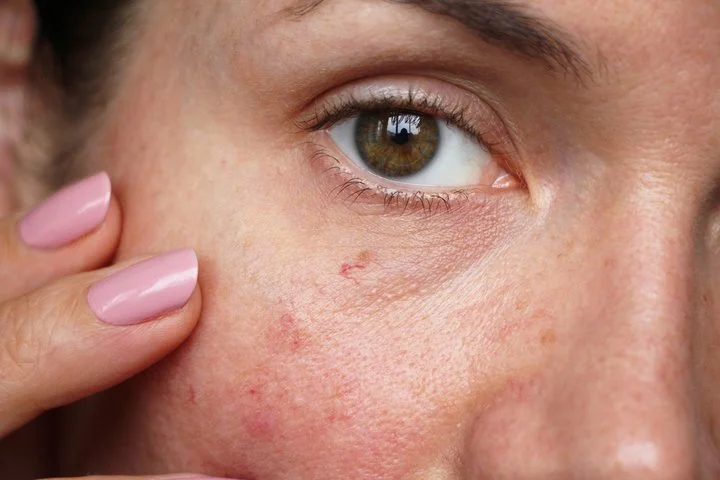
Telangiectasia — small visible thread or spider veins, particularly around the nose, cheeks and face
Diffuse facial redness
Localised areas of superficial redness
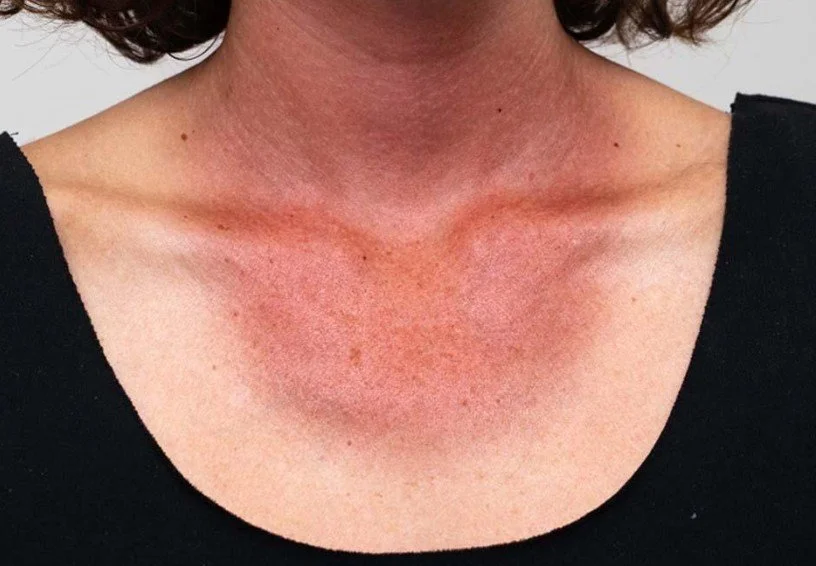
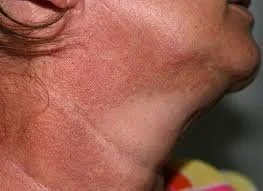
Poikiloderma of Civatte — the characteristic mottled red-brown discolouration commonly seen on the sides of the neck and upper chest
Selected superficial vascular changes suitable for cosmetic laser treatment
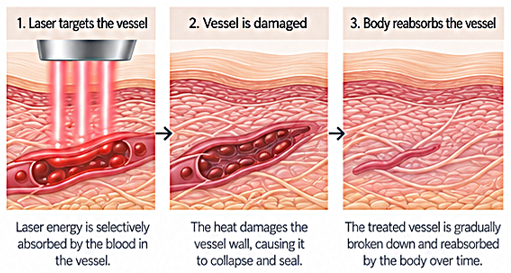
Vascular laser treatment uses wavelengths of light that are preferentially absorbed by haemoglobin within superficial blood vessels. The aim is to deliver controlled energy to the targeted vessel while minimising unnecessary inflammation and effects on surrounding skin. Over time, successfully treated vessels may become less visible as the body gradually processes the treated tissue.
Treatment plans are individualised according to the size, depth, colour and location of the vessels, as well as your skin type and response to treatment. Some vascular concerns may improve significantly with treatment, while others require a series of sessions or occasional maintenance.
Redness isn't always just a cosmetic concern.
Understanding what is causing it is an important part of deciding whether vascular laser treatment is appropriate.
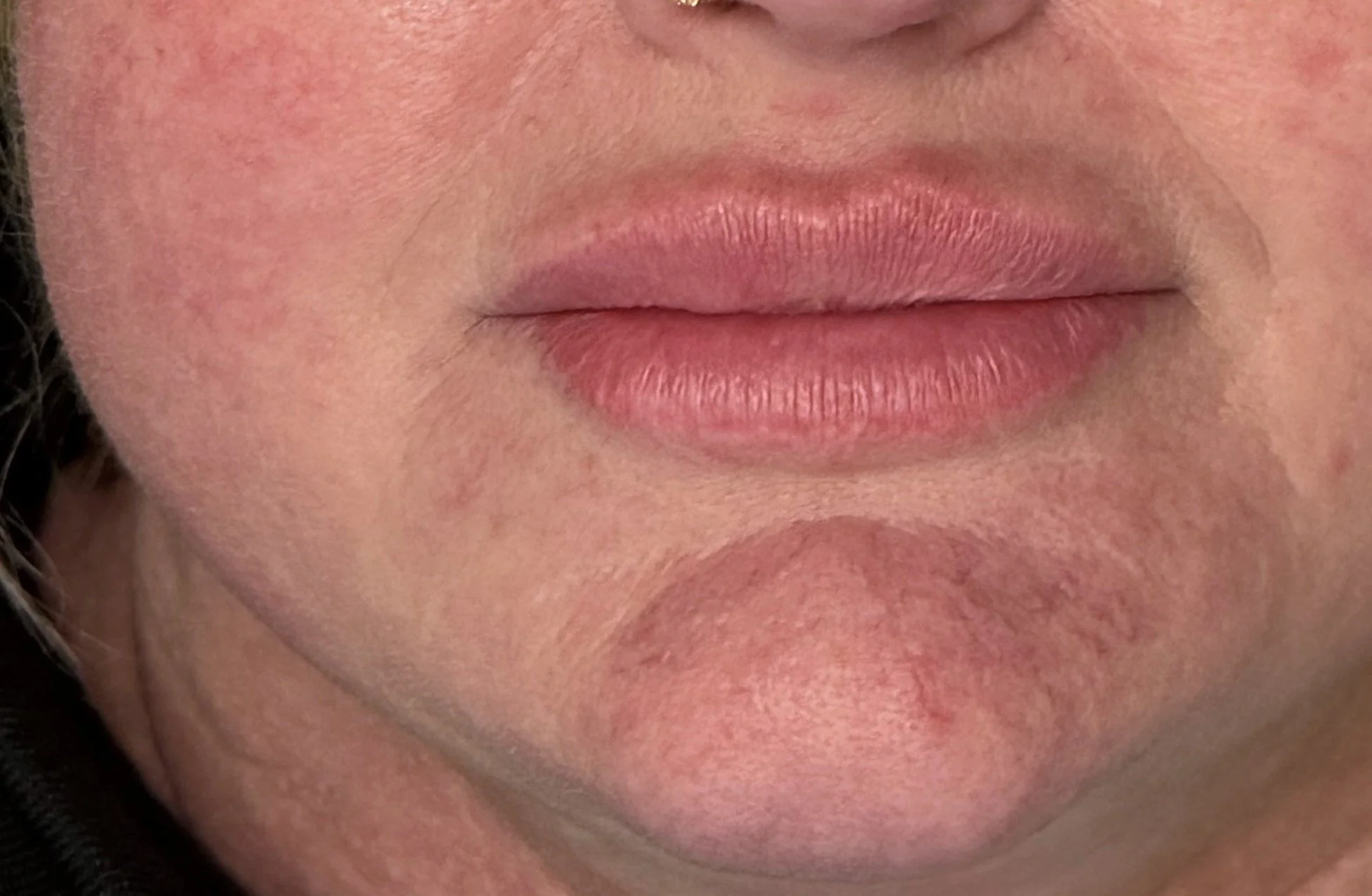
Thread Veins
Fine superficial thread veins — or telangiectasia — commonly develop around the nose, cheeks and other areas of the face. Thread veins can develop when small superficial blood vessels become permanently widened and more visible, often influenced by genetics, cumulative sun exposure, skin ageing, inflammation or repeated flushing. Selected facial thread veins may respond well to vascular laser treatment, although new vessels can develop over time and some areas may require more than one treatment.
What About Spider Veins on the Legs?
Visible veins on the legs can behave differently from small superficial facial vessels and may be associated with underlying veins that cannot be addressed with a cosmetic laser. For this reason, I do not routinely treat lower-limb spider veins at Piko Laser Clinic. Medical or vascular assessment may be recommended so that any underlying venous involvement can be appropriately evaluated before cosmetic treatment is considered.
Poikiloderma
Poikiloderma commonly appears as a mottled combination of redness and brown pigmentation, particularly across the sides of the neck and upper décolletage. It develops gradually through chronic sun exposure and skin ageing, producing a combination of superficial vascular changes, irregular pigmentation and changes in the skin’s texture. Because both superficial blood vessels and pigmentation may contribute to its appearance, treatment may need to address each component differently.
This is a good example of why pigment and vascular concerns sometimes overlap — and why assessment comes before deciding which laser wavelength or treatment approach is appropriate.
Rosacea
Rosacea is a chronic and often complex inflammatory skin condition that can involve persistent redness, flushing, visible blood vessels, sensitivity and inflammatory changes. While laser and light-based treatments can sometimes improve certain vascular features of rosacea, they do not treat the underlying inflammatory condition. For this reason, redness or vascular concerns associated with rosacea are approached cautiously, conservatively, and only in conjunction with GP or dermatologist review.
Assessment Comes First
Not all redness is vascular in origin, and not all visible blood vessels are appropriate for cosmetic laser treatment. Assessment considers the pattern and likely cause of the redness, skin sensitivity, current inflammation, medical and skin conditions, healing history, medications, sun damage and exposure, and your individual pigmentation risk. This is particularly important where redness and pigmentation occur together, as can happen with chronic sun damage and poikiloderma. Treatment may need to address the vascular and pigment components differently rather than treating the area as a single concern.
Where the cause of redness is unclear, outside the scope of cosmetic laser treatment, or requires medical management, GP or dermatologist assessment may be recommended before treatment proceeds.