
Our Laser Pigment and Vascular Services.
Even skin tone. Regain radiance.
At Piko Laser Clinic, pigment and vascular laser treatments are approached conservatively, with a strong focus on safety, skin assessment, and realistic outcomes. Not all pigmentation or redness should be treated — and not all laser treatments are appropriate for every skin type or condition. We treat selected benign pigment and vascular concerns that fall within an appropriate nurse-led scope of practice. Potentially suspicious lesions, uncertain diagnoses, or conditions requiring medical management will be referred appropriately.
Treatment plans are tailored based on your skin type, pigmentation depth, vascular involvement, inflammation, hormonal factors, sun exposure history and your risk of post-inflammatory pigmentation. Our treatment approach is focused on:
Gradual, staged laser treatments
Careful energy selection to minimise risk
Emphasis on skin response rather than aggressive clearance.
Pigment treatment targets colour in the skin.
Vascular treatment targets blood within unwanted vessels.
Same principle. Different target. Different laser approach.

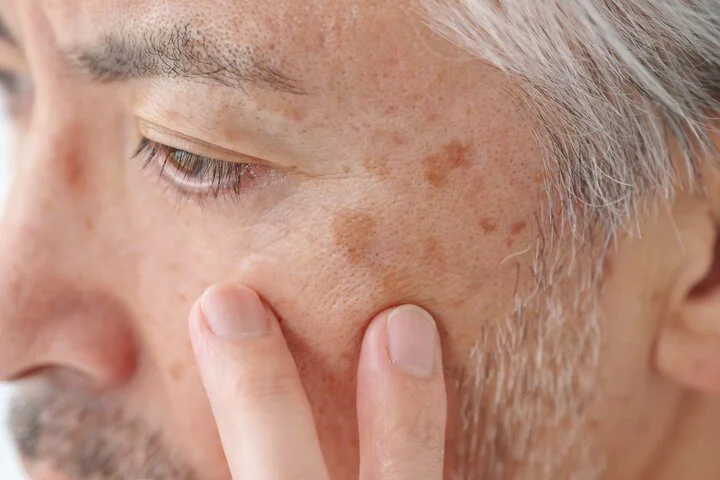
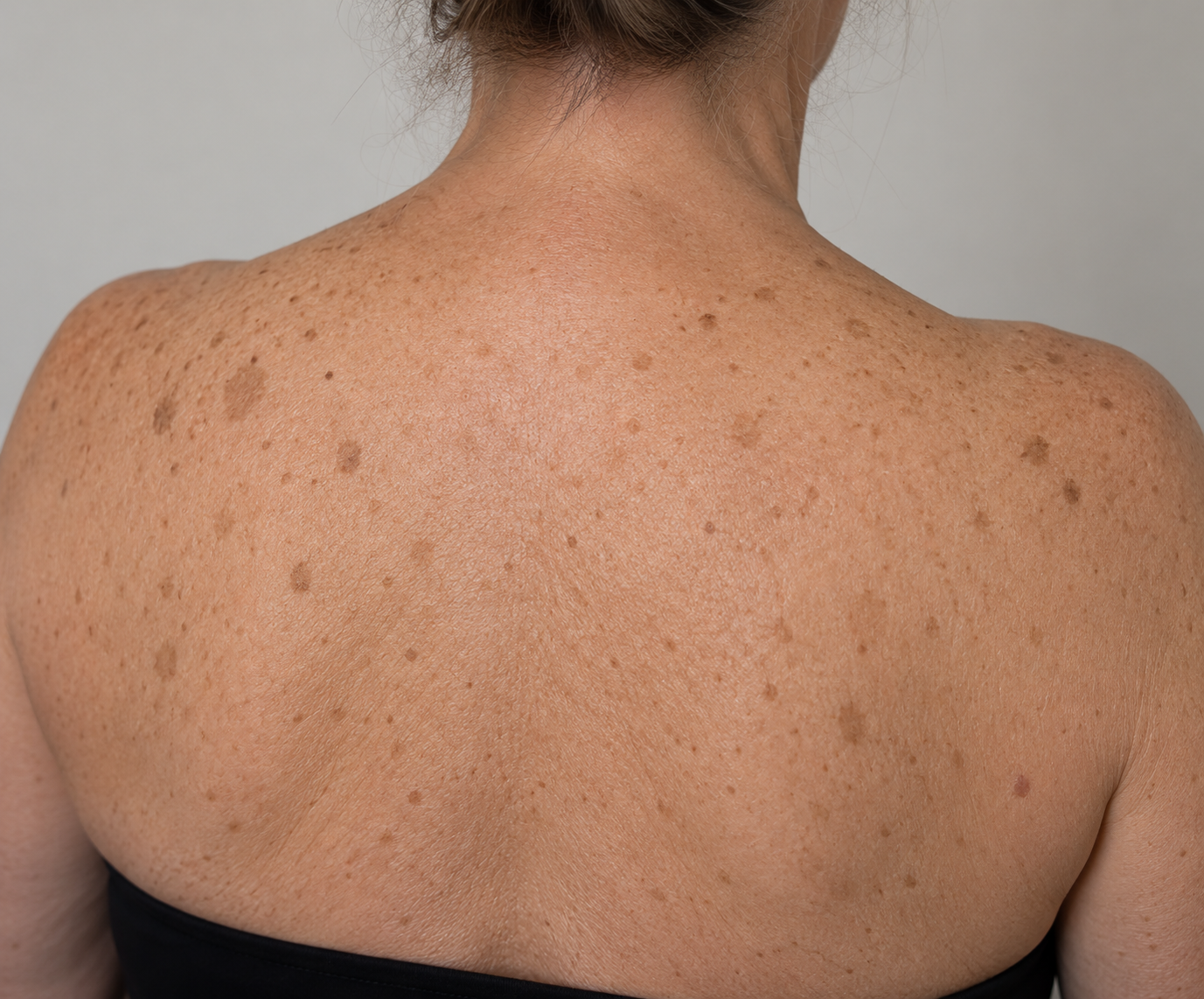
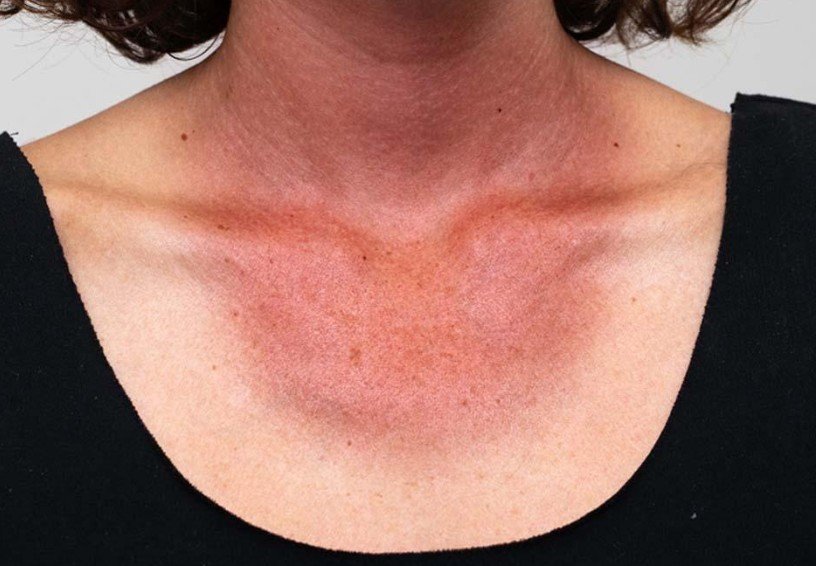
Understanding pigment and vascular biology.
Pigment and vascular concerns may appear similar on the surface of the skin, but biologically they are quite different. Pigmented lesions involve melanin, the natural pigment responsible for skin colour, while vascular lesions involve blood vessels and haemoglobin, the pigment within red blood cells. Understanding what is creating the visible colour is an important part of selecting the safest and most appropriate laser treatment.
Not all pigmentation behaves the same way - Freckles, sun-related lentigines and post-inflammatory pigmentation can differ in their depth, cause and response to treatment. Some pigment is relatively superficial and well defined, while other pigmentation may be deeper, influenced by inflammation, hormones or ongoing sun exposure. Certain pigment conditions, such as melasma, can also be unpredictable and may worsen when exposed to excessive heat or inflammation.
Vascular concerns are equally varied - Visible capillaries, telangiectasia and localised areas of redness occur when superficial blood vessels become enlarged or more visible through the skin. Their size, depth, colour and underlying cause can all influence how they respond to laser. Some vascular changes are suitable for cosmetic laser treatment, while others may represent a condition that requires medical or dermatological assessment instead.
What laser treatment can (and can’t) do for vascular and pigmented skin conditions.
Laser treatment works by delivering a wavelength of light that is preferentially absorbed by a particular target in the skin, known as a chromophore. For pigment and vascular treatments, the principle is similar — but the target is different.
With pigmented lesions, the main target is melanin, the pigment responsible for colour in the skin. Laser energy is absorbed by excess or concentrated melanin and disrupts the pigmented cells or pigment-containing structures. Depending on how deep the pigment sits, it can then be gradually removed through normal skin turnover or processed by cells such as macrophages. This is why some superficial pigmented lesions initially become darker or develop a fine crust before gradually fading.
With vascular lesions, the target is not melanin — it is primarily haemoglobin within the blood vessel. The absorbed laser energy is converted into heat, producing controlled damage to the unwanted vessel. The vessel then closes or becomes non-functional and is gradually broken down and reabsorbed by the body. The aim is to treat the vessel while minimising unnecessary heating of the surrounding skin.
Some skin conditions contain both pigmented and vascular components, meaning there is more than one laser target. Trying to treat both targets simultaneously isn't always the best approach. Your treatment plan will address both components which means you will need a combination and/or staged approach.
Healing.
Results vary according to the type, depth and colour of the lesion, skin type, treatment parameters, sun exposure, individual biological response and adherence to aftercare. Some lesions respond after one treatment while others require multiple sessions. Complete clearance cannot be guaranteed.
Pigmented lesions may become darker or more noticeable immediately after treatment before fading or shedding over the following days or weeks. Vascular lesions may initially appear darker, redder or bruised before gradually becoming less visible. Some pigment or vessels may persist, recur or become visible again over time.
Treatment intervals are spaced carefully to allow the skin time to heal safely - usually 4-6 weeks apart.
Treatment approach.
Treatment plans are individualised following a thorough assessment of the type of pigment or vascular concern, its colour, depth and location, as well as your skin type, skin tone, sensitivity, medical history, medications, sun exposure and any previous treatments.
Depending on these factors, one or a combination of the following approaches may be used:
Pigment targeting – uses laser energy absorbed by melanin to disrupt unwanted pigment so it can gradually be processed and cleared by the skin and body.
Vascular targeting – uses laser energy absorbed by haemoglobin to selectively heat superficial blood vessels, allowing them to gradually become less visible.
Wavelength selection – different wavelengths may be selected according to the colour and depth of the target and your individual skin characteristics.
Conservative treatment parameters – energy settings are carefully selected to achieve an effective response while minimising unnecessary heat, inflammation and injury to surrounding skin.
LED light therapy – may be used as a supportive treatment to assist skin recovery and help manage inflammation.
Cooling and skin protection strategies – help improve comfort, control heat at the skin surface and protect surrounding tissue.
The aim is not simply to treat what looks brown or red. It is to identify what is creating the visible colour, determine whether it is appropriate for laser treatment, and then selectively target that structure while protecting the surrounding skin.
For pigmented lesions, the goal is typically to reduce unwanted pigmentation and create a more even skin tone. For vascular lesions, the goal is to reduce the visibility of unwanted superficial vessels and localised redness. Some concerns respond very well to laser, while others may require multiple treatments, ongoing management or an alternative approach.