
Advanced Pico Laser Technology.
Technology Chosen for Safety, Versatility and Skin Safety.
At Piko Laser Clinic, technology is an important, but the machine is only one part of a safe and effective treatment. Every treatment begins with assessment of your skin, the condition being treated, your medical history and what you are realistically hoping to achieve.
The clinic's primary laser platform is the Quanta Discovery Pico, a highly versatile medical laser system that combines multiple wavelengths, picosecond and nanosecond (Q-Switched) pulse technology, and fractional capabilities within a single platform. Rather than relying on one laser setting or treatment method, we select different wavelengths, pulse durations and treatment approaches according to the target and your individual skin response.
The same platform can therefore be used very differently depending on whether we are treating tattoo pigment, suitable benign pigmentation, selected vascular concerns, scar tissue or the scalp as part of a hair regeneration treatment plan.
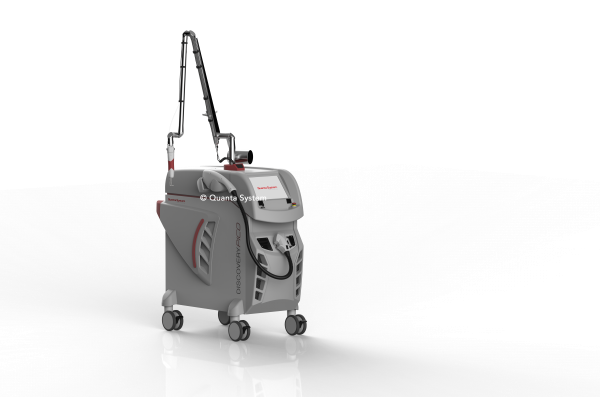
Quanta Discovery Pico
One laser platform. Multiple treatment approaches.
The Quanta Discovery Pico provides three true laser wavelengths — 1064 nm, 532 nm and 694 nm Ruby — alongside both picosecond and nanosecond (Q-Switched) pulse technology.
Why does this matter?
Different structures within the skin absorb different wavelengths of light. Tattoo ink, melanin and haemoglobin, for example, do not all respond to the same wavelength or in the same way. Having access to multiple wavelengths and pulse durations gives me greater flexibility to select treatment parameters according to the intended target rather than trying to treat every condition with the same approach.
For tattoo removal, extremely short laser pulses target tattoo pigment and fragment it into progressively smaller particles. The body's immune system then processes this fragmented pigment over the weeks and months following treatment.
For pigment and selected vascular treatments, carefully selected wavelengths can target unwanted pigment or haemoglobin while aiming to minimise unnecessary exposure to the surrounding skin. Not every pigmented or vascular lesion is suitable for cosmetic laser treatment, so appropriate assessment — and referral when indicated — remains an essential part of treatment.
For scar remodelling and hair regeneration, the laser is used very differently. Rather than trying to remove pigment, controlled fractional laser energy can be used to stimulate biological repair and remodelling processes within the skin.
This ability to change not simply the laser setting, but the way the laser interacts with the tissue, is one of the reasons I chose the Discovery Pico for Piko Laser Clinic.
Enhancing Treatment with Fractional Laser
Fractional laser treatment allows treatment of microscopic areas of skin while leaving surrounding tissue intact. Rather than treating the entire skin surface uniformly, laser energy is delivered in a controlled fractional pattern to stimulate a biological response within the tissue. This multi-level fractional skin stimulation may be incorporated into several different treatment plans.
In scar remodelling, fractional stimulation is used to encourage controlled tissue repair and progressive collagen remodelling, with the aim of improving characteristics such as texture, thickness, flexibility and overall appearance.
In hair regeneration, carefully selected non-ablative fractional treatment is used to stimulate the scalp environment and support follicular activity. This treatment may improve hair density, reduce shedding or encourage activity in follicles that remain viable.
Fractional treatment may also be used alongside tattoo removal to support the skin's recovery and may help manage some of the immediate tissue response associated with tattoo removal.
The important distinction is that fractional laser treatment is not performing the same job in every treatment. The technology is adapted to the biological outcome I am trying to achieve.
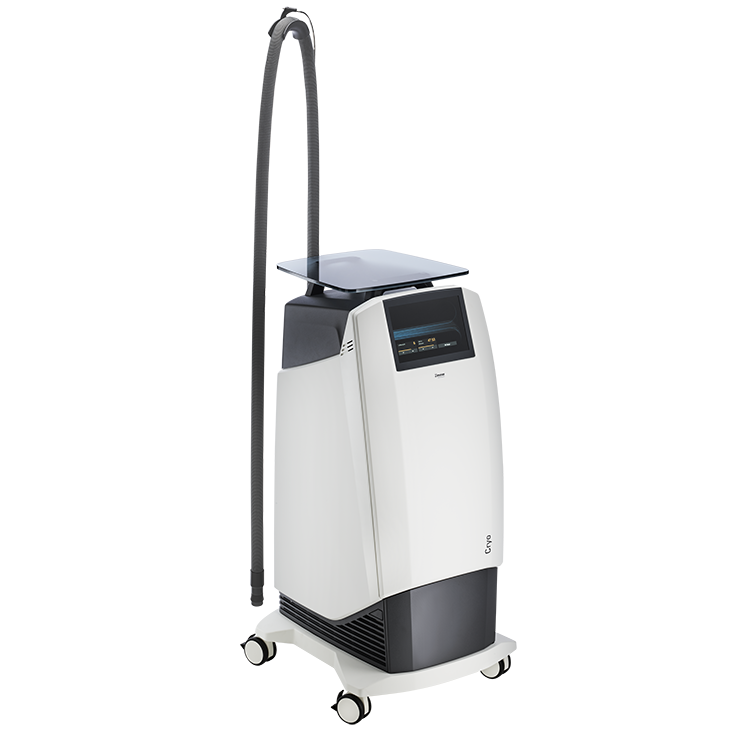
Zimmer Cryo 7 Cooling
Comfort is important. So is protecting the skin.
The Zimmer Cryo 7 provides a continuous stream of chilled air that can be directed onto the treatment area before, during and after laser treatment. Laser procedures can produce heat, stinging or discomfort depending on the treatment being performed. Controlled cold-air cooling helps make treatment more manageable without interfering with the laser beam or requiring direct contact with the treatment area. Cooling can help settle the immediate sensation of heat and reduce treatment-related discomfort, redness and swelling.
Cooling will be used differently according to the procedure. During tattoo removal, for example, cooling can be used before, throughout and immediately after treatment. For other procedures, it may be used selectively according to the wavelength, treatment area and individual skin response.
It sounds simple, but good skin cooling is an important part of providing a controlled and comfortable laser treatment rather than being regarded as an optional extra.
LED Light Therapy
Supporting the skin before and after laser treatment
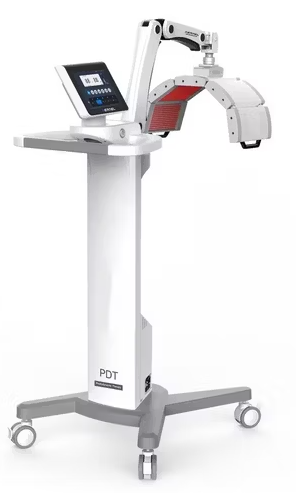
LED Light Therapy (or LED photobiomodulation) uses specific wavelengths of low-level light to influence cellular processes without heating or damaging the skin. Unlike laser treatment, LED is not being used to destroy pigment or create controlled tissue injury. Its role is supportive.
Depending on the treatment plan, red, near-infrared, blue or yellow LED light may be selected for different biological effects.
Red and near-infrared light are commonly used to support cellular activity, circulation, tissue repair and modulation of inflammation.
Blue light acts more superficially and may be selected where its effects on the skin's microbial environment are useful.
Yellow light may be incorporated where calming visible redness and supporting the early recovery phase are treatment priorities.
LED may therefore be incorporated differently across the clinic. Following tattoo removal or scar treatment, the emphasis may be on supporting recovery and settling inflammation. Within a hair regeneration, regular LED may be used alongside fractional laser treatment to support the scalp and follicular environment.